PCA ResourcesPCA Educational Information
Video Resources
What is Posterior Cortical Atrophy? (Seeing Dementia Differently)
In this video, we talk through what PCA is. It is often called the visual variant of dementia but this doesn’t fully explain the symptoms. Although the eyes are healthy, changes in the brain mean a person with PCA can’t accurately process what they see or interact with the space around them. Early PCA symptoms are frequently mistaken for stress, anxiety, or eyesight problems. My Dad lived with young onset PCA for 10 years, and he visited the opticians many times before being referred to a neurologist and receiving a diagnosis.
Why glasses can’t fix Posterior Cortical Atrophy (Seeing Dementia Differently)
Experiencing vision problems or seeing words move on a page often leads people to the optician first. This video explains how Posterior Cortical Atrophy impacts brain-based visual perception rather than eye health, why standard eye tests miss early symptoms, and why educating eye care professionals is essential for timely neurological referrals.
How did we know Dad had PCA? (Seeing Dementia Differently)
Drawing from personal experience with my dad, this video highlights the early signs that he had Posterior Cortical Atrophy. He experienced subtle driving difficulties, trouble reading analog clocks, letters and numbers flipping or jumping around a page, and missing everyday objects placed right in front of him.
Hallucinations vs Misinterpretations in PCA dementia (Seeing Dementia Differently)
When living with Posterior Cortical Atrophy (PCA), visual disturbances can sometimes be mistaken for hallucinations. In this video, we break down the difference between a true hallucination and a visual misinterpretation, like seeing a dressing gown on the back of a door and thinking it's a person.
Do I see what you see? (Created Out of Mind)
Do I see what you see? is a short film about the experiences of people living with Posterior Cortical Atrophy (PCA). The animated film recreates what it feels like to live with the knowledge that your brain might be playing tricks on you and that you are seeing differently from everyone else.
Websites & Documents

Posterior Cortical Atrophy (Alzheimer’s Research UK)
This resource is available as a webpage or a downloadable booklet. It covers what PCA is, what causes it, and early symptoms.
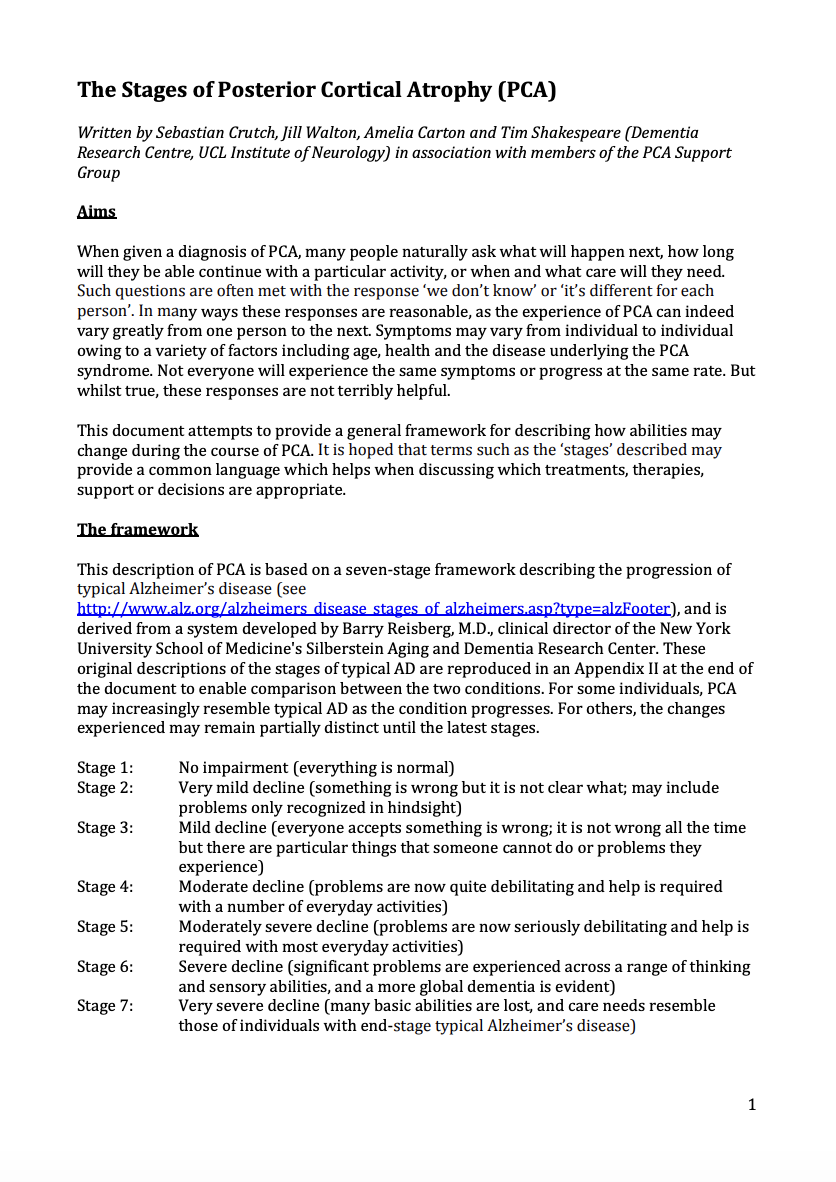
The Stages of Posterior Cortical Atrophy (Rare Dementia Support)
Contains information that may be upsetting
This document is a framework for how PCA might progress. It is very unique to the individual so your loved one might not experience all of the symptoms listed and possibly not in this order. This is intended to give you an outline based off of other peoples lived experiences. Please understand that there is information in here about later stages and end of life so only read if you are ready to do so - if you would like support going through this document, I would be happy to help, head to the contact form on the website and get in touch.
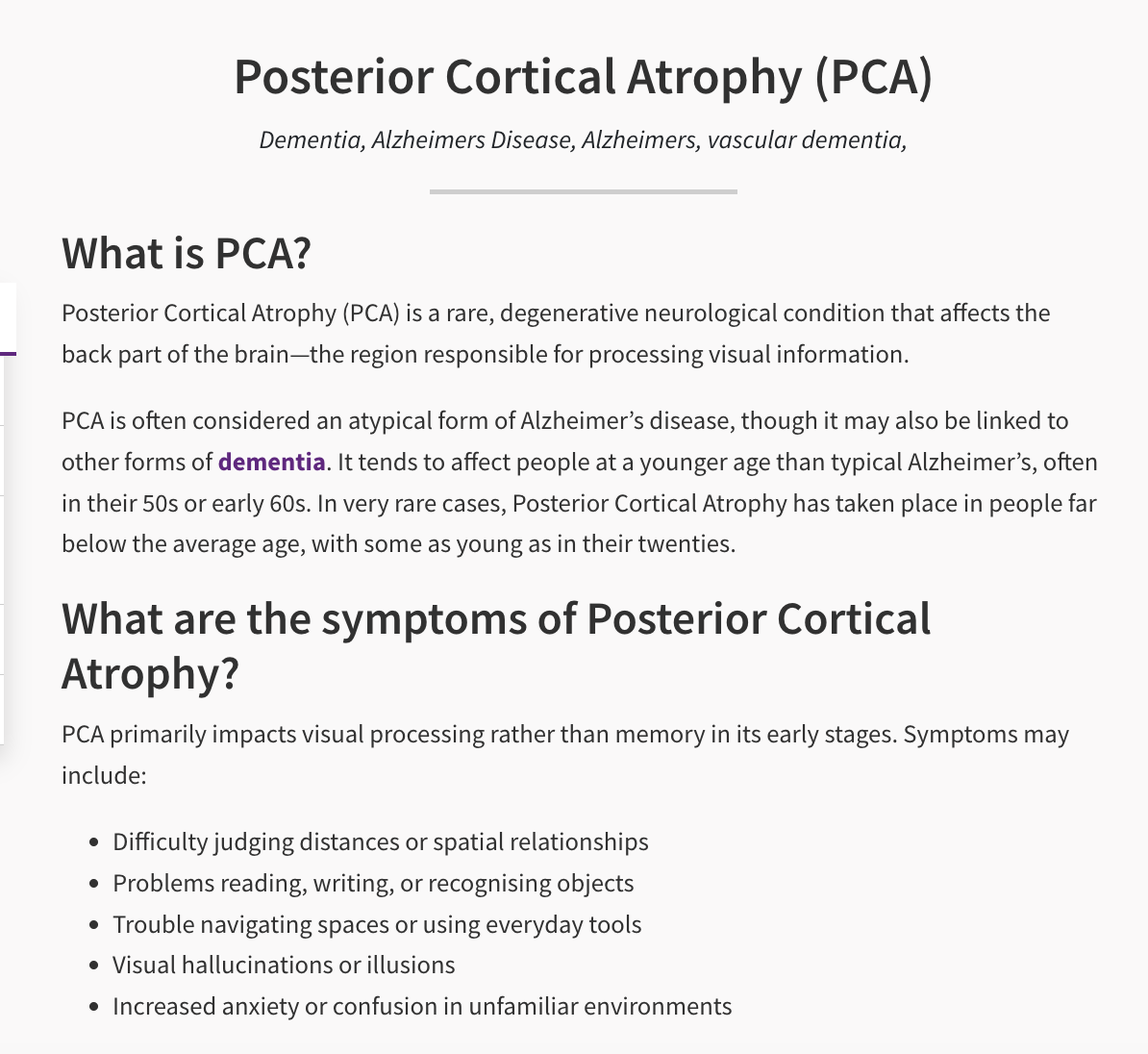
Posterior Cortical Atrophy (The Brain Charity)
This page from The Brain Charity covers the early signs of PCA, including difficulty judging distances, problems with reading and writing, trouble recognising objects, and visual illusions. It also explains that PCA often begins in a person’s 50s or early 60s. It’s a helpful starting point if you’re noticing changes in vision that eye tests can’t explain, and it includes practical suggestions for dementia carers and signposting to further support.